
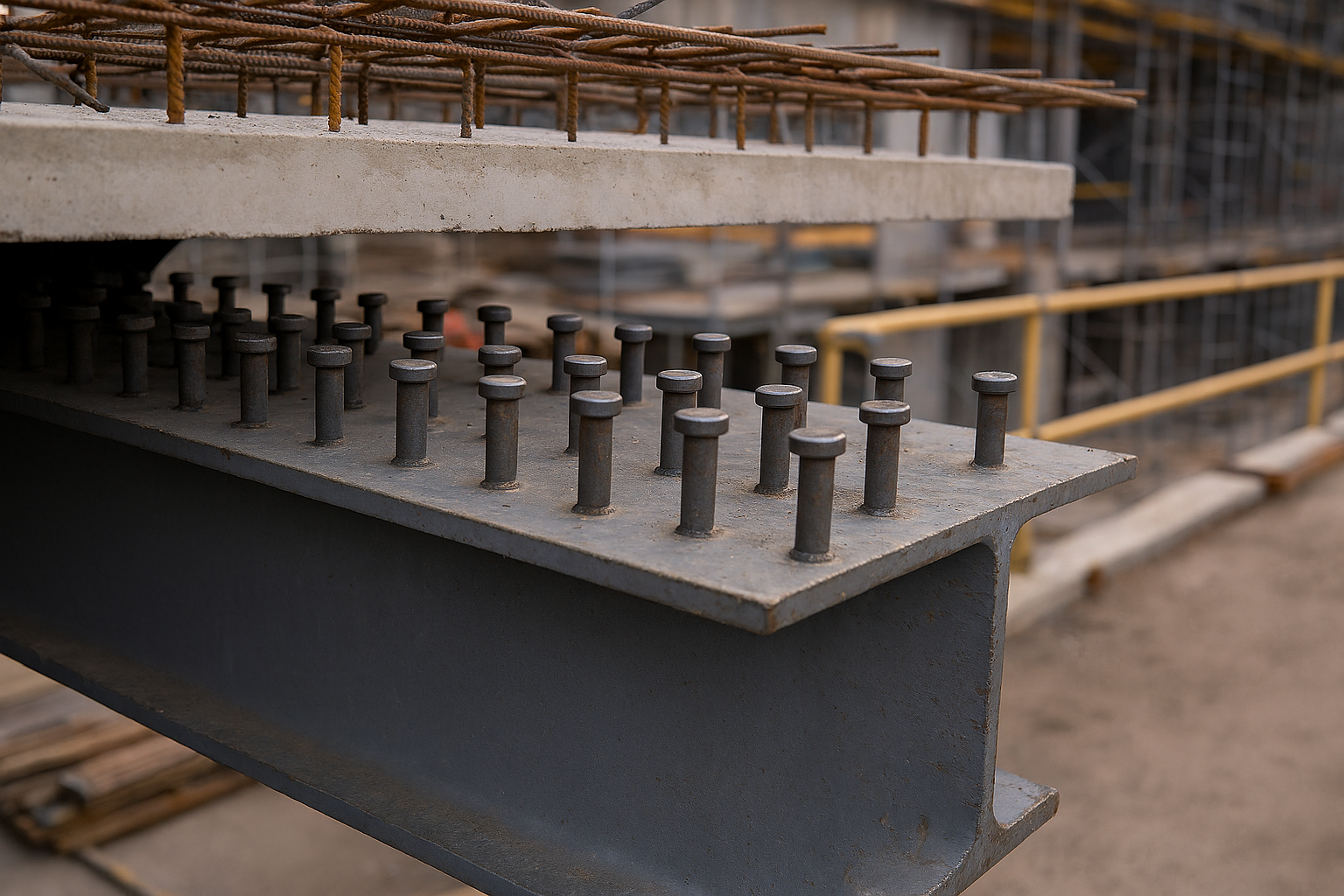
Countries and Projects where Shear Studs are Most Widely Used in the World
1. United States – High-Rise Buildings and Bridges
The United States is one of the pioneers of composite construction technology. One World Trade Center (New York) is one of the best-known examples of shear stud usage. In this project, shear studs welded onto steel columns and beams worked in conjunction with concrete slabs to provide both seismic resistance and rigidity against wind loads.
Shear studs also played a critical role in the Golden Gate Bridge rehabilitation projects. During the modernization, studs were welded onto the steel decks to achieve composite behavior, thereby increasing the bridge’s load-carrying capacity.
Why was it necessary?
- To ensure structural rigidity under high wind and seismic loads
- To achieve an economical design using slimmer cross-sections
- To control vibrations in long spans

2. Japan – Earthquake-Resistant Projects
As a country with high seismic risk, Japan is one of the world leaders in the use of shear studs. The Akashi Kaikyō Bridge, one of the world’s longest suspension bridges, utilizes shear studs between the steel deck and the concrete deck to achieve a composite effect. This makes the bridge resistant to both seismic loads and strong winds.
Tall structures like the Tokyo Skytree are also projects where shear studs are used extensively. Steel-concrete composite columns gain high ductility and energy absorption capacity thanks to studs.
Why was it necessary?
- Energy dissipation through the combined action of steel and concrete during an earthquake
- Long-lasting and safe structural design
- Rigidity against extreme wind loads
3. Europe – Bridge and Infrastructure Projects
In Europe, shear studs are widely used, particularly in composite bridges. The Millau Viaduct (France) is one of the most iconic examples of shear stud usage. In this bridge, the concrete decks poured over the steel girders are integrated with the steel via the shear studs, resulting in exceptional rigidity.
In Germany, shear studs are implemented as a standard solution in infrastructure projects such as the A7 Highway expansion project for steel-girder bridges.
Why was it necessary?
- Economical and lightweight design for long spans
- Resistance to high traffic loads
- Reduced maintenance costs
4. China – Mega Projects and Rapid Urbanization
China has seen a significant increase in the use of shear studs over the past 20 years. The Hong Kong–Zhuhai–Macau Bridge is one of the mega projects where shear studs are used most extensively. On this bridge, millions of shear studs were welded to ensure the steel and concrete work together effectively.
Additionally, the Shanghai Tower is another example demonstrating how shear studs play a critical role in high-rise structures. Composite columns and slabs have been made both rigid and cost-effective thanks to shear studs.
Why was it necessary?
- Rigidity and stability for very tall structures
- Load transfer in long-span bridges
- A practical solution for a fast construction process
5. Middle East – High-Rise Buildings and Infrastructure
The Burj Khalifa in Dubai is one of the best-known examples of the use of shear studs in high-rise buildings. The combination of steel and concrete has ensured that this colossal structure is resistant to both wind and seismic loads.
Why was it necessary?
- Rigidity against extreme wind loads
- Lightweight and durable composite systems
Conclusion
The stud bolt is an indispensable component of modern civil engineering. From the United States to Japan, and from Europe to China, the stud bolt plays a critical role in the world’s largest projects regarding load transfer, composite behavior, cost-effective design, and safety. As illustrated in the projects mentioned above, this fastener provides practical, cost-effective solutions. Without these elements, today’s mega-bridges and skyscrapers would not be possible.
More Information
With our specially designed production line for shear stud production, we manufacture 150,000 shear studs per month in compliance with TS EN ISO 13918 standards. In addition to standard shear studs in sizes ranging from 50mm to 250mm in lengths and diameters of 16, 19, 22, and 25, we also offer custom production for customer projects in lengths such as 60, 90, 110, and 220 mm. For more detailed information about shear studs and applications tailored to your needs, please contact us.